
Dr. Lewis Morris Rutherfurd (1816-1892)
Astronomer, of New York City & "Tranquility" Hackettstown, New Jersey
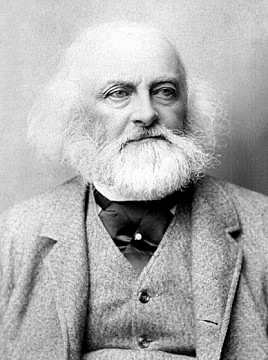
He was born in Morrisania, New York (he was a great-grandson of Lewis Morris, 3rd Lord of Morrisania), and graduated from Williams College, Massachusetts, in 1834. He began his career in law, partnering with the husband of his father's first cousin, Peter Augustus Jay, and then Hamilton Fish, but retired in 1849 to dedicate his life to astronomy. He performed pioneering work in spectral analysis, and experimented with celestial photography. He invented instruments (eg., a micrometer for measuring photographs, a machine for producing improved ruled diffraction gratings, and the first telescope designed specifically for astrophotography) which enabled him to produce a quality collection of photographs of the Sun, Moon, and planets, as well as star clusters and stars down to the fifth magnitude. From 1862, he began making spectroscopic studies using his new diffraction grating and noticed distinct categories of spectral classes of stars, which Angelo Secchi expanded upon in 1867 to list a set of four stellar classes.
Richard Proctor, the greatest popularizer of astronomy in the 19th century, called Rutherfurd "the greatest lunar photographer of the age." The lunar crater "Rutherfurd" is named for him and a professorship in Columbia University's astronomy department is named in his honor, as is the astronomical observatory at Pupin Hall. He was one of the original members of the National Academy of Sciences (created in 1863), an associate of the Royal Astronomical Society, and a trustee of Columbia University (1858-84) to whom he gifted his collection of astronomical photographs. The university conferred upon him the honor of Doctor of Law (LL.D.) in 1887, and two years earlier U.S. President Chester A. Arthur named him as one of the delegates to the International Meridian Conference.
In 1841, he married Margaret, the natural daughter of the Rev. John White Chanler who was adopted and brought up by her maternal grandmother's childless brother, Peter Gerard Stuyvesant, heir to the Stuyvesant fortune. Mrs. Rutherfurd was the sister of John Winthrop Chanler, of Rokeby in Dutchess Co., New York. After living in Europe for several years, they made their home at the Stuyvesant-Rutherfurd House in New York (where he built his observatory) before retiring to the Stuyvesant Mansion in New Jersey.
The Rutherfurds had seven children who were prominent in society and were among the first cousins of "the Astor Orphans" at Rokeby: Their eldest son, Rutherfurd, was famous for his collection of antique arms and armor, and his widow married Prince Caraman de Chimay; their daughter, Margaret, married Henry White, U.S. Ambassador to France and Italy, whose second wife was Emily Vanderbilt; their son, Lewis, was the second husband of Mrs. Anne (Harriman) Vanderbilt; and, their youngest son, Winthrop, had been Consuelo Vanderbilt's paramour until she was forced to marry the Duke of Marlborough.