
Marie (Hewitt) Wilkinson (1853-1908)
Mrs. Marie (Hewitt) Wilkinson, of 57 Avenue Kléber, Paris
Her paternal grandmother was a first cousin of U.S. President General Ulysses S. Grant while her father was a Colonel in the Confederate States Army, killed when she was just ten years old at the Battle of Chickamauga in 1863. In October, 1866, her beautiful, "brilliant and fascinating" mother, Belle, brought her on the ship Arago by way of Le Havre for her education in Paris as recalled in Mrs. Burton Harrison's memoirs, Recollections Grave and Gay, "... the passenger list made up of many New Yorkers known to each other, including the family of the new United States Minister to the Court of Napoleon III, General Dix. Other people we knew on board were Mr. Martin Zborowski, of New York - whose wife had been a Morris - with his sons, John, or "Laddie", and Elliot, and his young daughter Anna, now the Countess de Montsaulnin, of Paris. A young Southern widow, Mrs. Hewitt, formerly Miss Belle Key, of Mississippi (sister-in-law of Mrs. Walker Fearn), was taking a little blonde daughter, Marie Hewitt, subsequently the handsome Mme. Wilkinson, of Paris, to be put at Mme. Grenfell's school in Paris."
In about 1868, Marie's mother married fellow passenger (and notable eccentric) Martin Zborowski, and Mrs. Harrison recalled the next chapter in Marie's life: "There were two American beauties, half-sisters (in fact step-sisters, the same age), Miss Hewitt and Miss Zborowski; the latter made a very good marriage to a French count, because her father gave her twenty thousand pounds (circa $100,000) as a dot, but to her half-sister he said he would give nothing at all, and told her that she must marry an old Englishman living in Paris, very rich... Miss Hewitt was desperately in love at the time with a French marquis, but he was not well enough off, he said, to marry her without a dot, so she married the old Englishman; and the day after the wedding her stepfather gave her the same dot as he had given to his own daughter... The marriage with the Englishman was far from being a happy one... They never spoke to each other unless actually obliged to do so."
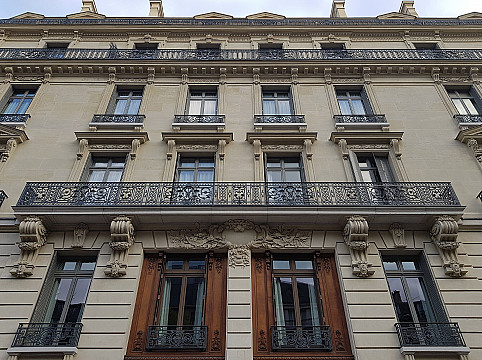
Her stepfather died in 1878, leaving her $80,000 in bonds in the Cairo & Fulton Railway Company and an interest in the coal mine at Fours de Chaux de la Basse-Loire. Three years later, her husband died and having been resident with him at 70 Avenue des Champs-Élysées (the house replaced in 1914 by the present building seen there today), she stayed in Paris but moved into her own home at 57 Avenue Kléber (see images).
The final chapter of Marie's life was as tragic as it was shocking. Two years after her sudden and "mysterious" death, her name made the headlines when it was suggested that she had been poisoned by her own brother-in-law, the recently deceased Comte de Montsaulnin - the same man who had courted her first before learning that it was her stepsister, Anna, who was the wealthy one. Breaking off his relationship with Marie, it was Anna who promptly became the Comtesse de Montsaulnin. But on becoming a widow in 1880, in addition to her own inheritance, Marie came into possession of her late husband's $3-million fortune as well as his valuable collection of art and furnishings, and in her will it transpired that it was her brother-in-law who was named as her sole heir, not her adopted daughter, the Baroness St. Bresson, nor her beloved aunt, Mrs. Fearn.
Shortly before her death, Marie had told her friends that attempts had been made to poison her, and she pointed a finger at an English nurse who had administered a triple dose of of morphine and strychnine that would have finished her off if Dr. Papus - the controversial occultist Gérard Encausse, founder of the Martinist Order - had not intervened. After this event, her physician, Dr. Henri Fischer (Surgeon to the U.S. Consulate), insisted on her isolation, not even allowing her closest friends to see her, including Princess Marie of Saxe Meinengen, the aunt of the German Kaiser. When death finally caught Marie, the official cause given was simply "blood poisoning," no more.
On the night of Marie's death witnesses referred to wagons seen waiting in the street near her house, and within an hour of her death they were seen driving off filled with valuable art treasures which had been brought down rapidly from her apartments. As is often the case with American gossip columns of the day, the splendor of her furnishings were almost certainly hyperbolic, particularly when it was said that among the pieces carried off was Marie's bed, apparently the very same in which the Empress Joséphine herself had slept in at Château de Malmaison. One way or the other, by the time Marie's attorney (a native of New Orleans but then a prominent lawyer in Paris) arrived at her apartments to place an official seal on the doors, it was too late, her most expensive treasures had gone.
It was only after the death of the Comte de Montsaulnin - two years later in 1910 - that new evidence surrounding Marie's death came to light. Dr. Papus stated that it was a poison apple that had killed her, delivered to her home one week before her sudden death. In addition, the same English nurse (Miss Marshall) who Marie had dismissed for injecting her with the same poison that eventually killed her had since been tracked down, and was found to have taken refuge with the Montsaulnin family. The identity of the chemist who made up the fatal prescription had also been discovered, and it transpired that he lived directly opposite Marie on the Avenue Kléber. The final blow was the discovery that it was her own physician, Dr. Fischer of 5 Avenue Matignon - the same who insisted on keeping her isolated - who had written out the prescription for the poison that killed her.
Armed with the new evidence, Marie's aunt, Mrs. Fearn - wife of the U.S. Ambassador to Greece and whose mother, Marie's grandmother, was a first cousin of U.S. President Ulysses S. Grant - and her daughter Mary (the former Princess Wolkonsky) took an apartment at No. 11 Avenue Victor Hugo (Paris) for the duration of the trial. It elicited particular interest, "following so close on the attempt to poison Madame Claude Berton, the daughter of Dr. John L. Phipps, of Chicago and Seattle... (causing) people to begin to wonder if the poison route is the usual way of getting rid of American women in Paris."
In about 1868, Marie's mother married fellow passenger (and notable eccentric) Martin Zborowski, and Mrs. Harrison recalled the next chapter in Marie's life: "There were two American beauties, half-sisters (in fact step-sisters, the same age), Miss Hewitt and Miss Zborowski; the latter made a very good marriage to a French count, because her father gave her twenty thousand pounds (circa $100,000) as a dot, but to her half-sister he said he would give nothing at all, and told her that she must marry an old Englishman living in Paris, very rich... Miss Hewitt was desperately in love at the time with a French marquis, but he was not well enough off, he said, to marry her without a dot, so she married the old Englishman; and the day after the wedding her stepfather gave her the same dot as he had given to his own daughter... The marriage with the Englishman was far from being a happy one... They never spoke to each other unless actually obliged to do so."
Her stepfather died in 1878, leaving her $80,000 in bonds in the Cairo & Fulton Railway Company and an interest in the coal mine at Fours de Chaux de la Basse-Loire. Three years later, her husband died and having been resident with him at 70 Avenue des Champs-Élysées (the house replaced in 1914 by the present building seen there today), she stayed in Paris but moved into her own home at 57 Avenue Kléber (see images).
The final chapter of Marie's life was as tragic as it was shocking. Two years after her sudden and "mysterious" death, her name made the headlines when it was suggested that she had been poisoned by her own brother-in-law, the recently deceased Comte de Montsaulnin - the same man who had courted her first before learning that it was her stepsister, Anna, who was the wealthy one. Breaking off his relationship with Marie, it was Anna who promptly became the Comtesse de Montsaulnin. But on becoming a widow in 1880, in addition to her own inheritance, Marie came into possession of her late husband's $3-million fortune as well as his valuable collection of art and furnishings, and in her will it transpired that it was her brother-in-law who was named as her sole heir, not her adopted daughter, the Baroness St. Bresson, nor her beloved aunt, Mrs. Fearn.
Shortly before her death, Marie had told her friends that attempts had been made to poison her, and she pointed a finger at an English nurse who had administered a triple dose of of morphine and strychnine that would have finished her off if Dr. Papus - the controversial occultist Gérard Encausse, founder of the Martinist Order - had not intervened. After this event, her physician, Dr. Henri Fischer (Surgeon to the U.S. Consulate), insisted on her isolation, not even allowing her closest friends to see her, including Princess Marie of Saxe Meinengen, the aunt of the German Kaiser. When death finally caught Marie, the official cause given was simply "blood poisoning," no more.
On the night of Marie's death witnesses referred to wagons seen waiting in the street near her house, and within an hour of her death they were seen driving off filled with valuable art treasures which had been brought down rapidly from her apartments. As is often the case with American gossip columns of the day, the splendor of her furnishings were almost certainly hyperbolic, particularly when it was said that among the pieces carried off was Marie's bed, apparently the very same in which the Empress Joséphine herself had slept in at Château de Malmaison. One way or the other, by the time Marie's attorney (a native of New Orleans but then a prominent lawyer in Paris) arrived at her apartments to place an official seal on the doors, it was too late, her most expensive treasures had gone.
It was only after the death of the Comte de Montsaulnin - two years later in 1910 - that new evidence surrounding Marie's death came to light. Dr. Papus stated that it was a poison apple that had killed her, delivered to her home one week before her sudden death. In addition, the same English nurse (Miss Marshall) who Marie had dismissed for injecting her with the same poison that eventually killed her had since been tracked down, and was found to have taken refuge with the Montsaulnin family. The identity of the chemist who made up the fatal prescription had also been discovered, and it transpired that he lived directly opposite Marie on the Avenue Kléber. The final blow was the discovery that it was her own physician, Dr. Fischer of 5 Avenue Matignon - the same who insisted on keeping her isolated - who had written out the prescription for the poison that killed her.
Armed with the new evidence, Marie's aunt, Mrs. Fearn - wife of the U.S. Ambassador to Greece and whose mother, Marie's grandmother, was a first cousin of U.S. President Ulysses S. Grant - and her daughter Mary (the former Princess Wolkonsky) took an apartment at No. 11 Avenue Victor Hugo (Paris) for the duration of the trial. It elicited particular interest, "following so close on the attempt to poison Madame Claude Berton, the daughter of Dr. John L. Phipps, of Chicago and Seattle... (causing) people to begin to wonder if the poison route is the usual way of getting rid of American women in Paris."
Parents (2)


Categories
Share
http://chroniques.eaubonne.free.fr/la-famille-berton-a-eaubonne.html
https://www.nytimes.com/1910/08/21/archives/latest-poison-mystery-in-france-american-wife-of-french-journalist.html
https://www.nytimes.com/1910/08/21/archives/latest-poison-mystery-in-france-american-wife-of-french-journalist.html