
Rutherford B. Hayes (1822-1893)
Gen. Rutherford Birchard Hayes, 19th President of the United States (1877-1881)
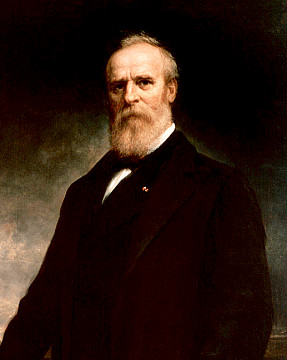
He was preceded in the Presidency by Ulysses S. Grant and after serving one term in office for the Republican Party was succeeded in 1881 by James A. Garfield. His Vice-President throughout was William A. Wheeler. He assumed office through one of the most controversial elections in American history. The 1876 election between Hayes and Samuel Tilden was disputed, with contested electoral votes from several Southern states. The crisis was resolved through the Compromise of 1877, which awarded Hayes the presidency in exchange for the withdrawal of Federal troops from the South, effectively ending Reconstruction. Before his presidency, he had a distinguished career as a lawyer in Ohio and served as a General in the Union Army during the Civil War and was wounded multiple times. He later served three terms as Governor of Ohio, building a reputation as a reformer who supported civil rights and government efficiency.
As president, Hayes focused on civil service reform, working to end the corrupt "spoils system" by implementing merit-based government appointments. He also attempted to protect African-American voting rights in the South, though his efforts were largely unsuccessful after Reconstruction's end. Hayes kept his campaign promise to serve only one term, declining to seek renomination in 1880. His presidency marked a transition from the post-Civil War era toward the Gilded Age, characterized by his commitment to honest government and national reconciliation. In 1852, he married Lucy Webb of Lexington, Kentucky, and they had eight children (listed), five of whom lived to adulthood.