
Richard Teller Crane Jr. (1873-1931)
President of Crane & Co., Plumbing & Hardware Manufacturers, Chicago
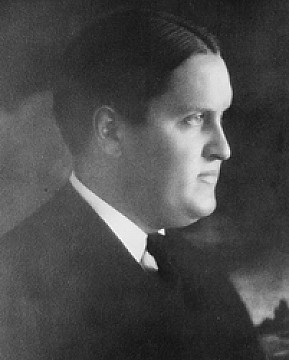
He was born in Chicago and two years after his father's death he succeeded his elder brother, Charles, as President of Crane & Co., a position he held until his death seventeen years later. Under his leadership, the company grew to 20,000-employees with facilities in 200-showrooms across the world, convincing the public that bathroom facilities should be as attractive as they are efficient. From 1921, in addition to a 5% annual salary rise, he began to give shares to his employees every Christmas. In six years (1924-30), he distributed $10-million in company stock to his staff, and he left additional stock in his will to long-time employees who had not sold his original gift.
In 1904, he married Florence, daughter of Harlow Miles Higinbotham, a business partner of Marshall Field, and sister-in-law of Joseph Medill Patterson, grandson of the Mayor of Chicago and founder of the Daily News in New York. They had two children and lived between their mansion on North Lake Shore Drive in Chicago (see images); Castle Hill in Ipswich, Massachusetts; and, their cottage on Jekyll Island (see images) which boasted 40-rooms and 17-bathrooms. He was an avid collector of Washingtonia much of which he gifted to the Naval Academy at Annapolis in 1918. On his death, his personal fortune was estimated at $50-million and in his era he was reputed to have been the second richest man in Chicago (after Richard Warren Sears, and then his successor Julius Rosenwald).
In 1904, he married Florence, daughter of Harlow Miles Higinbotham, a business partner of Marshall Field, and sister-in-law of Joseph Medill Patterson, grandson of the Mayor of Chicago and founder of the Daily News in New York. They had two children and lived between their mansion on North Lake Shore Drive in Chicago (see images); Castle Hill in Ipswich, Massachusetts; and, their cottage on Jekyll Island (see images) which boasted 40-rooms and 17-bathrooms. He was an avid collector of Washingtonia much of which he gifted to the Naval Academy at Annapolis in 1918. On his death, his personal fortune was estimated at $50-million and in his era he was reputed to have been the second richest man in Chicago (after Richard Warren Sears, and then his successor Julius Rosenwald).


