
Millard Fillmore (1800-1874)
13th President of the United States (1850-1853)
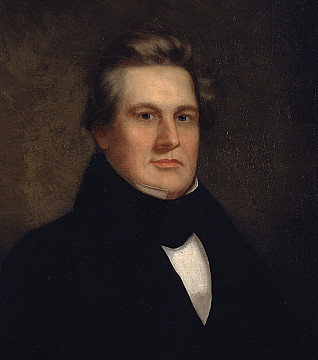
He was preceded in the Presidency by Zachary Taylor who died in office, and after serving one term for the Whigs he was succeeded in 1853 by Franklin Pierce. The office of Vice President remained vacant during his tenure. He was born into poverty in Moravia in upstate New York and was largely self-educated, working his way up from humble beginnings as an apprentice cloth-maker to become a lawyer and politician. Before his presidency, he served in the New York State Assembly and later in the U.S. House of Representatives as a member of the Whig Party. He was elected Vice President under Taylor in 1848, though the two men disagreed on key issues, particularly regarding slavery's expansion into new territories.
As president, Fillmore's most significant act was signing the Compromise of 1850, a series of bills designed to ease tensions between free and slave states. The compromise included the controversial Fugitive Slave Act, which required citizens to assist in capturing runaway slaves. While intended to preserve the Union, these measures ultimately satisfied neither North nor South and contributed to growing sectional divisions. Fillmore failed to secure his party's nomination in 1852 and later ran unsuccessfully as the Know-Nothing Party candidate in 1856. He died in Buffalo, New York, in 1874. Though well-intentioned, Fillmore is generally regarded by historians as an ineffective president who failed to address the fundamental issues driving the nation toward civil war. He had two daughters by his first wife (both died unmarried) and no children by his second marriage.
As president, Fillmore's most significant act was signing the Compromise of 1850, a series of bills designed to ease tensions between free and slave states. The compromise included the controversial Fugitive Slave Act, which required citizens to assist in capturing runaway slaves. While intended to preserve the Union, these measures ultimately satisfied neither North nor South and contributed to growing sectional divisions. Fillmore failed to secure his party's nomination in 1852 and later ran unsuccessfully as the Know-Nothing Party candidate in 1856. He died in Buffalo, New York, in 1874. Though well-intentioned, Fillmore is generally regarded by historians as an ineffective president who failed to address the fundamental issues driving the nation toward civil war. He had two daughters by his first wife (both died unmarried) and no children by his second marriage.