
Michael Longridge Esq JP of Bedlington (1785-1858)
British Engineer and Member of Britain's Industrial Elite
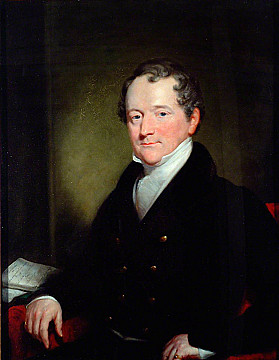
Michael Longridge was a prominent British engineer and industrialist whose contributions to iron manufacturing and railway engineering played a significant role in the early development of the railway industry during the Industrial Revolution. Born in 1785 in Bishopwearmouth (now part of Sunderland), Michael Longridge was the son of Michael Longridge and Elizabeth Bewick. He was the nephew of Thomas Longridge, who co-owned the Bedlington Ironworks in Northumberland from 1782. This familial connection would later influence Michael's career path in the iron industry. In 1809, the Bedlington Ironworks came under the ownership of Gordon and Biddulph, a London-based company. Michael Longridge joined the works during this period and became a partner around 1816. Under his leadership, the ironworks expanded its production capabilities, notably pioneering the rolling of long malleable iron rails in 1820. This advancement was crucial for the development of durable railway tracks, facilitating the growth of the railway system. Longridge's collaboration with engineer John Birkinshaw led to the production of wrought iron rails, which were stronger and more reliable than the previously used cast iron versions. These rails were instrumental in the success of early railways, including George Stephenson's Stockton and Darlington Railway. In 1823, Longridge became a partner in the newly formed Robert Stephenson and Company, alongside George Stephenson, his son Robert Stephenson, and Edward Pease. This company was established to manufacture locomotives and played a pivotal role in the advancement of railway technology. In 1837, the Bedlington Ironworks built its first locomotive, named "Michael Longridge," for the Stanhope and Tyne Railway. The following year, Longridge established R. B. Longridge and Company, a locomotive manufacturing firm directed by his fourth son, Robert Bewick Longridge. The company produced locomotives for various European railways, including the Netherlands and the Kingdom of Naples. Michael Longridge maintained a professional relationship with George Stephenson, the renowned railway engineer. Their correspondence included discussions on railway matters, such as the laying out of several railway lines, including the Liverpool and Manchester Railway, the London and Birmingham Railway, the Stockton and Darlington Railway, the North Midlands Railway, and the Newcastle and Berwick Railway. These exchanges highlight Longridge's involvement in significant railway projects of the time. Despite his substantial contributions to the railway industry, Michael Longridge declined a knighthood. This decision reflects his modest character and preference for a life dedicated to engineering and industry over public recognition. Michael Longridge retired in 1853, selling the Bedlington Ironworks, which subsequently declined and closed in 1867. Michael Longridge of Bedlington, a prominent local figure, served as a Justice of the Peace (JP). In early-1800s England, a JP was a local magistrate—usually a landowner or gentleman—responsible for keeping law and order, handling minor criminal cases, issuing warrants, overseeing parish constables, and managing local administration such as roads, poor relief, and licensing. He passed away on 4 October 1858, at Hollymount Hall in Bedlington. His contributions to iron manufacturing and railway engineering left a lasting impact on the industrial landscape of Britain.

