John Henry Harjes (1829-1914)
Banker, of Drexel, Harjes & Co., of Paris & "Villa Harjes" Grasse, Alpes-Maritimes
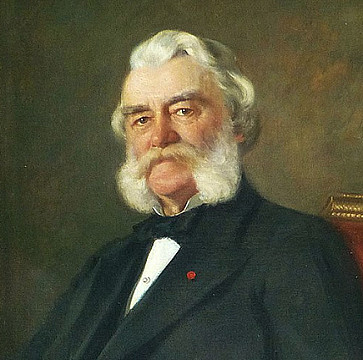
He was born in Switzerland and emigrated with his parents (who would later return home) from Bremen in Germany to Baltimore, where he became an American citizen. It is popularly - if improbably - told that at age nineteen, without any formal qualifications, he took the only job he could find filling inkwells in a local bank, before starting his own bank, Harjes Brothers, just five years later (1853) in Philadelphia. What is certainly true is that in Philadelphia he was quickly noticed by one of the country's foremost bankers, Anthony J. Drexel, and in 1868 Drexel invited him to open a bank in partnership with him in Paris: Drexel, Harjes & Co., No. 3 Rue Scribe.
In 1870, Napoleon III declared war on Prussia and Paris quickly found itself under siege. Harjes managed to keep the bank open, but it was almost impossible to do any business. Instead, he seized the opportunity to arrange a $10-million war loan for France from the London-based American banker, Junius S. Morgan. The money duly arrived at the Port of Le Havre in the form of gold bars. Hidden beneath Mme. Harjes' significant ruffled skirts, she maintained a perfectly calm demeanor as they took their carriage through Prussian-occupied Normandy and various guarded checkpoints to deliver the bullion safely to the government in Paris. The successful completion of that one task established a very long and very profitable partnership between the Morgan, Drexel and Harjes families.
In the 1870s, the firm participated in refinancing U.S. Federal government debt. A Drexel-Morgan-Rothschild alliance took $260 millions of bonds, with Morgan selling mainly in Britain and Rothschild on the Continent. After 1873, Drexel, Harjes & Co. continued developing a market in France for the securities of U.S. companies, and also, with conspicuous new offices at 31 Boulevard Haussmann, the firm became the, "natural place for financial accommodation for the growing numbers of Americans visiting or living in Paris." In 1895, after Drexel died, J.P. Morgan assumed control of Drexel, Morgan & Co. and renamed the firm J.P. Morgan & Co. Similarly, Drexel, Harjes & Co. was renamed Morgan, Harjes & Co. In 1902, the French firm supervised the transfer of the $50 million that the United States paid to France to acquire its interests in the Panama Canal.
In 1906, Harjes both co-founded the American Hospital in Paris (that still exists) and donated the statue of Benjamin Franklin that is still seen on the southwest corner of the Place de Trocadéro in Paris. In 1909, he retired from the bank in favor of his son, Col. H. Herman Harjes. He was a patron of the American Chamber of Commerce in Paris, created an Officer de la Legion d'Honour, and a prominent member of the American Colony belonging to the Bois du Boulogne and Polo clubs. He married Amelia Hessenbruch and they had 6-children (listed). The family lived between 62 Avenue Henri Martin in Paris and their winter home, "Villa Harjes" (see images) at Grasse in the Alpes-Maritimes. When he died in 1914 he left an estate valued at just under $4-million which was administered by his son Herman, his widow, and his old friend Edward T. Stotesbury.
In 1870, Napoleon III declared war on Prussia and Paris quickly found itself under siege. Harjes managed to keep the bank open, but it was almost impossible to do any business. Instead, he seized the opportunity to arrange a $10-million war loan for France from the London-based American banker, Junius S. Morgan. The money duly arrived at the Port of Le Havre in the form of gold bars. Hidden beneath Mme. Harjes' significant ruffled skirts, she maintained a perfectly calm demeanor as they took their carriage through Prussian-occupied Normandy and various guarded checkpoints to deliver the bullion safely to the government in Paris. The successful completion of that one task established a very long and very profitable partnership between the Morgan, Drexel and Harjes families.
In the 1870s, the firm participated in refinancing U.S. Federal government debt. A Drexel-Morgan-Rothschild alliance took $260 millions of bonds, with Morgan selling mainly in Britain and Rothschild on the Continent. After 1873, Drexel, Harjes & Co. continued developing a market in France for the securities of U.S. companies, and also, with conspicuous new offices at 31 Boulevard Haussmann, the firm became the, "natural place for financial accommodation for the growing numbers of Americans visiting or living in Paris." In 1895, after Drexel died, J.P. Morgan assumed control of Drexel, Morgan & Co. and renamed the firm J.P. Morgan & Co. Similarly, Drexel, Harjes & Co. was renamed Morgan, Harjes & Co. In 1902, the French firm supervised the transfer of the $50 million that the United States paid to France to acquire its interests in the Panama Canal.
In 1906, Harjes both co-founded the American Hospital in Paris (that still exists) and donated the statue of Benjamin Franklin that is still seen on the southwest corner of the Place de Trocadéro in Paris. In 1909, he retired from the bank in favor of his son, Col. H. Herman Harjes. He was a patron of the American Chamber of Commerce in Paris, created an Officer de la Legion d'Honour, and a prominent member of the American Colony belonging to the Bois du Boulogne and Polo clubs. He married Amelia Hessenbruch and they had 6-children (listed). The family lived between 62 Avenue Henri Martin in Paris and their winter home, "Villa Harjes" (see images) at Grasse in the Alpes-Maritimes. When he died in 1914 he left an estate valued at just under $4-million which was administered by his son Herman, his widow, and his old friend Edward T. Stotesbury.