
James Watson Webb (1884-1960)
J. Watson Webb, of 740 Park Ave., New York City & "Brick House" Shelburne, Vermont
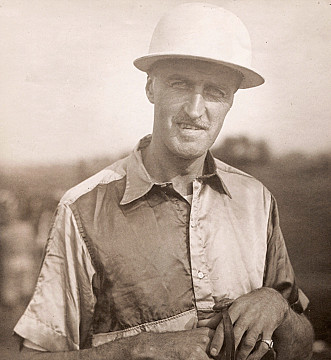
He was born in Burlington, Vermont, the maternal grandson of William Henry Vanderbilt. He was educated at the Groton School and Yale University (1907). He began his career with the Chicago & Northwest Railway before joining (1911) Marsh & McLennan, Insurance Brokers. During World War I, he served in France as a Captain of the 311th Field Artillery, 79th Infantry Division, which saw action during the Meuse-Argonne Offensive. After the war, he served one term as a Republican in the Vermont House of Representatives (1921), before refocusing on his career in insurance. In 1929, he became a partner in Vanderpoel, Pausner & Webb, and in 1933 he founded - and became Chairman of - Webb & Lynch, General Insurance Brokers. In 1947, he and his wife co-founded of the Shelburne Museum, a showcase of his wife's "collection of collections" of early American homes and public buildings, including a general store, meeting house, log cabin, and a steamship. He was a trustee of the New York Zoological Society and Norwich University in Northfield, Vermont, where he received an honorary D.C.L. in 1955.
He is considered the best left-handed polo player in the history of the sport, and remains the only left-handed 10-goaler. He was a member of the Big Four, playing on the American polo team that won the International Polo Cup from England at the Meadowbrook Polo Club in 1921, 1924, and 1927. In 1934, he was placed at No. 1 on America's All-Star polo team and was named Chairman of the U.S. Polo Association. He was also an enthusiastic fox-hunter who founded the Shelburne Foxhounds in 1912, and served as Master and Joint Master until 1951. He was President of the Master of Foxhounds Association from 1948 to 1954, and a big game hunter in Alaska and Canada, contributing mammal groups to the Smithsonian and the Peabody Museum at Yale University.
In 1910, he married Electra, daughter and co-heiress of Henry Osborne Havemeyer, President of the American Sugar Refining Company, and his wife Louisine (Elder) Havemeyer, Suffragist and Art Collector. When he left to fight in France, Electra drove an ambulance in New York City, and was named Assistant Director of the Motor Corps during the War. In 1942, during World War II she joined the Civilian Defense Volunteer Organization, and directed the Pershing Square Civil Defense Center and its blood bank. They had 5-children and lived between New York and the "Brick House" at Shelburne.
In 1910, he married Electra, daughter and co-heiress of Henry Osborne Havemeyer, President of the American Sugar Refining Company, and his wife Louisine (Elder) Havemeyer, Suffragist and Art Collector. When he left to fight in France, Electra drove an ambulance in New York City, and was named Assistant Director of the Motor Corps during the War. In 1942, during World War II she joined the Civilian Defense Volunteer Organization, and directed the Pershing Square Civil Defense Center and its blood bank. They had 5-children and lived between New York and the "Brick House" at Shelburne.