
Dominick Lynch (1754-1825)
Merchant, of Bruges, New York City & "Lynchville" Westchester Co., N.Y.
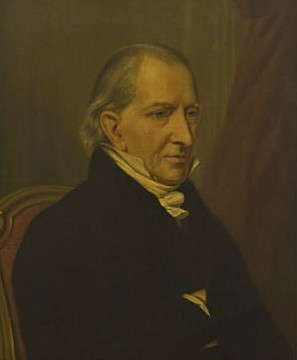
He was born in Ireland's Co. Galway, a member of the Lynch family of Newborough. Described as, "a man of excellent education," in 1780 he married his cousin, Jane Lynch, of Dublin. In 1778, he had established himself at Bruges in Flanders where his family had long been in business. There, he amassed a considerable fortune through the large-scale export of Flemish linseed to Limerick, Dublin, Galway, and Londonderry, with a fleet of four vessels. It was in Bruges that he met Don Thomas Stoughton, a merchant who enjoyed a good commercial relationship with France and Spain. In 1783, they went into business together with the idea of trading in America. The agreed capital was £7,500, with Lynch putting up £5,000 and Stoughton £2,500.
Stoughton established the firm in New York City, and after living for a period in London (where his eldest children, born in Bruges, were educated), Lynch joined him in 1785 - supposedly bringing with him more cash to the United States than “any other single individual in living memory.” The Lynches, with their children and servants, moved in with Stoughton who was then still unmarried. Stoughton was made Spanish Consul at New York, married Lynch's sister, Catherine, and the Lynches were among some 300 people invited to attend George Washington's inauguration ball in 1789. Washington referred to Lynch as, "the handsome Irishman." However, by 1795 the business partners - Lynch and Stoughton - had eventually fallen out and sued one another. Twenty years later, besides fines and costs, it was decided that Lynch should pay Stoughton $25,076.
After the dissolution of the firm, Lynch retired in affluent circumstances largely on account of the wealth he had amassed in Bruges, and in New York he was said to have, "dispensed a bountiful and refined hospitality." Soon after arriving in the city, he was offered - for what would today be considered a ridiculously small sum - a farm of 20-acres near City Hall, but he turned it down. Had he accepted it, he would've more than eclipsed the Goelet family fortune and ranked close to the Astors. Instead, he bought 697-acres near Fort Stanwix on the Mohawk River. By 1800, he had increased his holdings there to 2,397-acres. By 1796, he had laid out the property into village lots, and called the place "Lynchville" - now better known as Rome in Oneida County, New York. Between 1800 and 1820, he embellished the village with a woolen mill, a cotton factory and a saw-mill, and he leveled the southeast corner of Fort Stanwix to build himself a mansion. He represented Oneida County in legislature for a number of years and later became a judge.
In 1797, he purchased a large estate at Throgg's Point in Westchester County, bordering Long Island Sound. There he built "Lynchville, a magnificent stone residence" (distinguished by a Carrera marble fireplace) in the style of the Flemish chateaux he had been so familiar with in his youth. He lived there for the rest of his life, and from this home he dispensed, "munificent hospitality and took a leading part in the social events of the metropolis." He was a devoted Catholic and gave liberally of his means to forward church work and was one of the representative men who signed the "Catholic Address" to George Washington. At his death, he had fourteen children: James, Anastasia, Anthony, Dominick, Alexander, Margaret, Jasper, Jane, Henry, Harriet, Louisa, Sarah, Edward and William. By the marriage of these children, the Lynch family became allied with many of the old families of New York and Pennsylvania, including the Tillotsons, Shippens, Leas, Lawrences, Nortons, Luquers, Pringles, Maitlands, Harveys, Ridgways, etc.
Stoughton established the firm in New York City, and after living for a period in London (where his eldest children, born in Bruges, were educated), Lynch joined him in 1785 - supposedly bringing with him more cash to the United States than “any other single individual in living memory.” The Lynches, with their children and servants, moved in with Stoughton who was then still unmarried. Stoughton was made Spanish Consul at New York, married Lynch's sister, Catherine, and the Lynches were among some 300 people invited to attend George Washington's inauguration ball in 1789. Washington referred to Lynch as, "the handsome Irishman." However, by 1795 the business partners - Lynch and Stoughton - had eventually fallen out and sued one another. Twenty years later, besides fines and costs, it was decided that Lynch should pay Stoughton $25,076.
After the dissolution of the firm, Lynch retired in affluent circumstances largely on account of the wealth he had amassed in Bruges, and in New York he was said to have, "dispensed a bountiful and refined hospitality." Soon after arriving in the city, he was offered - for what would today be considered a ridiculously small sum - a farm of 20-acres near City Hall, but he turned it down. Had he accepted it, he would've more than eclipsed the Goelet family fortune and ranked close to the Astors. Instead, he bought 697-acres near Fort Stanwix on the Mohawk River. By 1800, he had increased his holdings there to 2,397-acres. By 1796, he had laid out the property into village lots, and called the place "Lynchville" - now better known as Rome in Oneida County, New York. Between 1800 and 1820, he embellished the village with a woolen mill, a cotton factory and a saw-mill, and he leveled the southeast corner of Fort Stanwix to build himself a mansion. He represented Oneida County in legislature for a number of years and later became a judge.
In 1797, he purchased a large estate at Throgg's Point in Westchester County, bordering Long Island Sound. There he built "Lynchville, a magnificent stone residence" (distinguished by a Carrera marble fireplace) in the style of the Flemish chateaux he had been so familiar with in his youth. He lived there for the rest of his life, and from this home he dispensed, "munificent hospitality and took a leading part in the social events of the metropolis." He was a devoted Catholic and gave liberally of his means to forward church work and was one of the representative men who signed the "Catholic Address" to George Washington. At his death, he had fourteen children: James, Anastasia, Anthony, Dominick, Alexander, Margaret, Jasper, Jane, Henry, Harriet, Louisa, Sarah, Edward and William. By the marriage of these children, the Lynch family became allied with many of the old families of New York and Pennsylvania, including the Tillotsons, Shippens, Leas, Lawrences, Nortons, Luquers, Pringles, Maitlands, Harveys, Ridgways, etc.