
Charles Izard Manigault (1795-1874)
of 6 Gibbes Street, Charleston, and the Marshlands, Silk Hope, & Gowrie Plantations
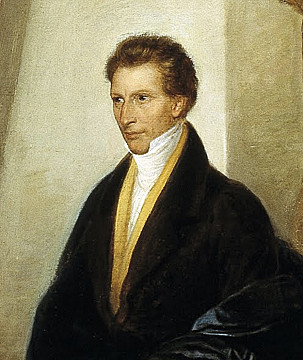
He was born in Charleston and grew up in Philadelphia, graduating from the University of Pennsylvania. Between 1817 and 1825, he lived in the Far East as a merchant in the China Trade before returning home when he married and became a rice planter. As a wedding present, in 1825 his father-in-law, Nathaniel Heyward, gave him the Silk Hope Plantation on the Savannah River with 126-slaves. In 1837, he purchased 6 Gibbes Street (see images) in Charleston from Col. William Drayton. Filling it with treasures from his travels in Europe & Asia, it was occupied by his descendants up until 1974. In 1851, he inherited what became his principal country residence, Marshlands (see images) on Charleston Neck, when his father-in-law bequeathed it to Mrs. Manigault. In addition to his inherited properties, he purchased the Gowrie Plantation on the Savannah River and at his peak he was said to have owned upwards of 250-slaves.
The family travelled often and in 1831 Charles, his wife, and two of their children were painted (see images) in Rome by Ferdinando Cavalleri. Between 1846 and 1848, he kept a journal when he took his family to live in Paris and while there they also travelled to other European cities including Athens and Rome. In Cairo, he and his eldest three sons were introduced to one of Egypt's most prominent statesmen, Muhammad Sherif Pasha Al-Kabir (d.1865), with whom he discussed the Mexican-American War, the production of cotton and the cultivation of rice. He and his wife, Elizabeth, had seven children (listed).
The family travelled often and in 1831 Charles, his wife, and two of their children were painted (see images) in Rome by Ferdinando Cavalleri. Between 1846 and 1848, he kept a journal when he took his family to live in Paris and while there they also travelled to other European cities including Athens and Rome. In Cairo, he and his eldest three sons were introduced to one of Egypt's most prominent statesmen, Muhammad Sherif Pasha Al-Kabir (d.1865), with whom he discussed the Mexican-American War, the production of cotton and the cultivation of rice. He and his wife, Elizabeth, had seven children (listed).