
Abraham Markoe (1727-1806)
Sugar Planter of St. Croix; Founder & 1st Captain of the Philadelphia First City Troop
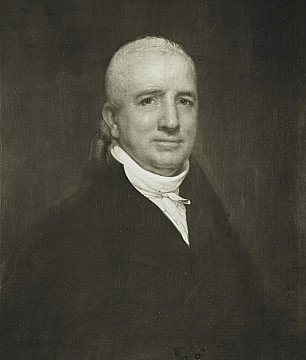
He was born on the Island of St. Croix in the Danish West Indies where his grandfather was Governor and his father owned one of the island's largest sugar plantations. He was the brother-in-law of Nicholas Cruger, of New York City. He served briefly with the Danish Army but resigned his commission to focus on the family's business interests (sugar, rum and molasses). The King of Denmark grew so fond of the Markoe's rum that he gifted them Cooper Island so they could increase their production. In 1770, two years after the death of his first wife, Abraham left his two sons in charge of his Caribbean plantations while he went to Philadelphia to expand their trade with Europe and the Colonies. There, he married his second wife, Elizabeth Baynton, with whom he would have a further seven children and he soon became a prominent figure in the business and social life of Philadelphia. They made their home at 322 Market Street which was the first house in Philadelphia to boast marble lintels over the windows.
In 1774, siding with the Colonies during the Revolution, he established The Philadelphia Light Horse, a cavalry unit composed of gentlemen of fortune who provided their own horses and equipment. As the unit's first Captain, he presented the troop with a regimental flag, which was his family flag 'The Markoe Standard', to which he added 13 stripes of blue and silver in the upper left corner to represent the 13 colonies fighting together for independence. The first active duty of the troop was to escort General George Washington from Philadelphia to New York where he was to take command of the Continental Army. On June 21st, 1775, Captain Markoe presented their Standard' to General Washington and they started for Cambridge. It became one of the first flags to ride into battle with the Patriots of the American Revolutionary War. The troop went on to fight at the Battles of Trenton, Princeton, Brandywine and Germantown, serving primarily as the personal bodyguard for Gen. Washington throughout the war; and, when Washington decreed that every soldier in the Continental Army would receive a daily ration of rum, he turned to his friend Captain Markoe whose sales increased accordingly.
Markoe was forced to resign his commission in 1776. He was still a Danish subject and Denmark had chosen to stay neutral in the war. But, the troop he established - known today as The First Troop Philadelphia City Cavalry - is the oldest military unit still in active service, and among the most decorated in the U.S. Army. Markoe remained in Philadelphia where he died in 1806, buried next to his second wife and his best friend, Benjamin Franklin. He had two sons by his first marriage and seven further children by his second. His descendants re-established the Markoe Rum Company in 2021.