
William Travers Jerome (1859-1934)
Criminal Prosecutor & New York County District Attorney, of 117 Park Ave., N.Y.C.
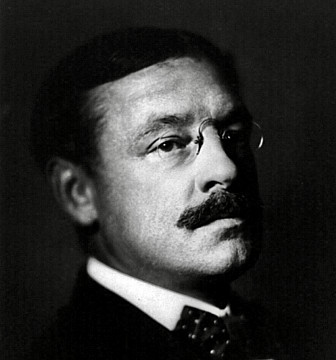
He was named for his uncle's good friend, the popular wit William Travers, and through the same uncle he was a first cousin of Jennie Jerome, mother of the British Prime Minister, Sir Winston Churchill. He did not graduate from Amherst College (Massachusetts), but he did pass his Bar Exams for New York in 1884. Fearless, determined, and described as, "a fiery orator and devastating cross-examiner... one of the most brilliant courtroom tacticians of his time," he was elected New York County District Attorney in 1902. Serving until 1909, he led a devastating campaign against political corruption and crime (often insisting on leading police raids he was known as the "the raiding judge") and while he made a reputation for himself for going head-to-head with Italian criminals who emigrated to the States with the "Black Hand," he made mincemeat out of a long line of crooked cops and politicians in the process. He took part in the Cuocolo Trial in Italy against the Camorra that gave him an opportunity to study the mafia and the functioning of Italian justice, and in 1907/08, he prosecuted Harry Kendall Thaw at the "Gilded Age Trial of the Century" for the murder of Stanford White.
One of the most notable raids he led was into, "the elaborate and luxuriously furnished gambling house" of Richard Canfield which had operated for twenty years and was where Reginald Vanderbilt was reputed to have lost $500,000 in five nights. He retired from private practice in 1910 and in the early 1920s established a company for producing motion pictures (movies) in color, which by 1929 was reported to have made him a fortune of $20-million. But, it was his legal career for which he is remembered and his obituary in The New York Times was full of admiration: "He devised new ways of exposing and prosecuting commercialized vice and gambling in this city. He was a sleepless enemy of racketeering long before we had the word. Without moral posturing, or assumption of the martyr spirit, and with a homely speech which went well with his vigorous procedure, and which the man in the street understood and approved, he attacked wickedness in high political places with an audacity and relentlessness that stirred the pulses of the people... No one who lived through those fighting days of Mr. Jerome's can forget the sort of thrill which ran through this city, and, indeed, spread to other cities throughout the land."
One of the most notable raids he led was into, "the elaborate and luxuriously furnished gambling house" of Richard Canfield which had operated for twenty years and was where Reginald Vanderbilt was reputed to have lost $500,000 in five nights. He retired from private practice in 1910 and in the early 1920s established a company for producing motion pictures (movies) in color, which by 1929 was reported to have made him a fortune of $20-million. But, it was his legal career for which he is remembered and his obituary in The New York Times was full of admiration: "He devised new ways of exposing and prosecuting commercialized vice and gambling in this city. He was a sleepless enemy of racketeering long before we had the word. Without moral posturing, or assumption of the martyr spirit, and with a homely speech which went well with his vigorous procedure, and which the man in the street understood and approved, he attacked wickedness in high political places with an audacity and relentlessness that stirred the pulses of the people... No one who lived through those fighting days of Mr. Jerome's can forget the sort of thrill which ran through this city, and, indeed, spread to other cities throughout the land."

