
William Henry Osborn (1820-1894)
of 32 Park Avenue, New York City; President of the Illinois Central Railroad
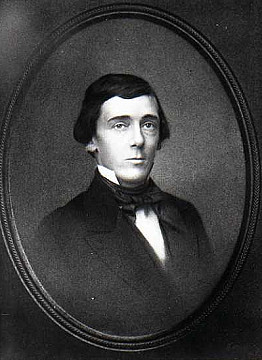
Born to a farming family in Salem, Massachusetts, he began his career as a teenager with the Boston East India shipping company. In 1841, he sailed to Manila as a junior partner in the firm of Peel, Hubbell & Co., and after ten years working in the dry goods business in the Philippines, he retired to New York City, because as he said, "more happens in New York in one day than happens anywhere else in a year."
In 1853, he married Virginia, the eldest daughter of Jonathan Sturges, co-founder of the Illinois Central Railroad in which he took a financial interest. In time, he replaced Sturges on the board of directors and as president rescued the railroad from scandal and financial peril surrounding the "Schuyler Fraud." He also became President of the Chicago, St. Louis & New Orleans Railroad, cementing his reputation as one of the most prominent railroad barons in the United States. Like his father-in-law, Osborn too became an art collector and a patron of the arts. With his wife's encouragement, he became friendly with many of America's up-and-coming artists, and commissioned several paintings. He became particularly friendly with Frederic Edwin Church and their families would remain close friends for three generations. In 1870, he built 32 Park Avenue (see images) and then Castle Rock at Garrison-on-the-Hudson, in which Church was heavily involved from the materials used to the siting and landscaping of its grounds. He and his wife had two sons.
In 1853, he married Virginia, the eldest daughter of Jonathan Sturges, co-founder of the Illinois Central Railroad in which he took a financial interest. In time, he replaced Sturges on the board of directors and as president rescued the railroad from scandal and financial peril surrounding the "Schuyler Fraud." He also became President of the Chicago, St. Louis & New Orleans Railroad, cementing his reputation as one of the most prominent railroad barons in the United States. Like his father-in-law, Osborn too became an art collector and a patron of the arts. With his wife's encouragement, he became friendly with many of America's up-and-coming artists, and commissioned several paintings. He became particularly friendly with Frederic Edwin Church and their families would remain close friends for three generations. In 1870, he built 32 Park Avenue (see images) and then Castle Rock at Garrison-on-the-Hudson, in which Church was heavily involved from the materials used to the siting and landscaping of its grounds. He and his wife had two sons.
Parents (2)


Children (2)


Categories
Share
https://www.christineisabelleoaklander.com/william-henry-osborn-18201894/