
Stephen F. Austin (1793-1836)
"Father of Texas" Empresario and the 4th Secretary of State of Texas
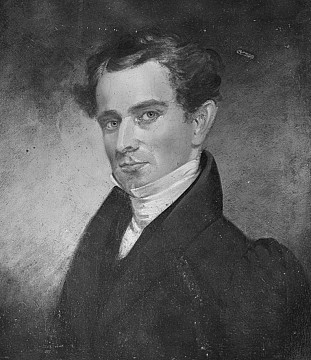
He was born Stephen Fuller Austin at "Austinville" next to the lead mines established by his father in Wythe County, Virginia. He grew up in Missouri and was educated in Connecticut before graduating (1810) from Transylvania University in Lexington, Kentucky, and becoming a lawyer. In 1814, he was elected to the Missouri Territory legislature, acquiring property at Little Rock on the Arkansas River where he became a circuit judge. In 1821 - the same year that Mexico won independence from Spain - he inherited his father's empresario (land agent's) grant to settle American families in Spanish Texas, establishing his own colony on 200,000-acres along the Brazos River - which had been his father's dying wish. He was careful in his choice of settlers and administered the colony through a combination of Mexican law and practical frontier justice. Throughout the 1820s, he worked tirelessly to build his colony, which became the most successful settlement in Texas. He served as the primary mediator between Anglo settlers and Mexican authorities, advocating for his colonists while attempting to maintain loyalty to Mexico. By 1830, he had brought approximately 1,500 families to Texas.
As tensions between settlers and the Mexican government grew, Austin initially sought peaceful resolution. In 1833, he traveled to Mexico City to petition for reforms and separate statehood for Texas. However, he was imprisoned for nearly two years after writing a letter suggesting Texas organize its own government. Released in 1835, he returned to find Texas on the brink of revolution. Though initially preferring to pursue a course of negotiation, he eventually supported independence and served as a commissioner to the United States seeking aid. After Texas won independence in 1836, Austin lost the presidential election to Sam Houston but very briefly served as Secretary of State before dying in office two months later at the age of 43. He never married, and despite having no children of his own, his legacy has lived on through the thousands of families he brought to Texas and the capital city - "Austin, Texas" - that bears his name.