
Henry Clay (1777-1852)
"The Great Compromiser" 9th U.S. Secretary of State & U.S. Senator from Kentucky
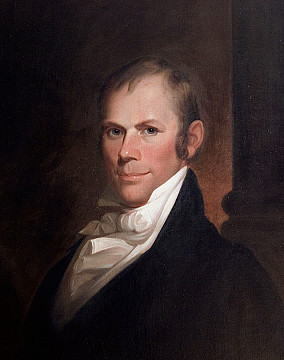
He was one of the most influential American statesmen of the 19th century, known as "The Great Compromiser" for his role in preventing civil war through major legislative agreements. Born in Hanover County, Virginia, his father was a preacher who died when Henry was young. After his mother remarried, the family moved to Richmond when he was fourteen, where he began studying law under George Wythe. His marriage in 1799 to the daughter of one of Kentucky's most prominent pioneering families helped to further elevate his status. He served as U.S. Congressman from Kentucky (1811–14, 1815–21, 1823–25) and U.S. Senator (1806–07, 1810–11, 1831–42, 1849–52). From 1825 to 1829 he served as Secretary of State under President John Quincy Adams. He ran for U.S. President three times (1824, 1832, and 1844), narrowly losing the 1844 U.S. Presidential Election to James K. Polk. As a Senator, he forged the Compromise of 1850 to maintain the Union, earning titles such as "The Great Compromiser" and "The Great Pacificator". He also developed the American System, promoting economic development through a national bank, protective tariffs, and internal improvements. In 1799, he married Lucretia Hart and they had eleven children (listed). They lived at their plantation home "Ashland" (see images) which he built in 1811 at Lexington.