
Robert Fulton Cutting (1852-1934)
R. Fulton Cutting, Chairman of the Citizen's Union of New York
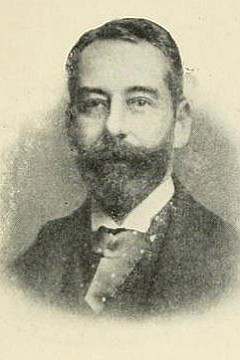
He represented an old New York family and was often referred to as "that supreme aristocrat" or “the first citizen of New York”. He was a financier and philanthropist who's chiefly remembered for starting the sugar beet industry in the United States along with his brother, William Bayard Cutting, who built the house that is now at the center of the "Bayard Cutting Arboretum State Park". The brothers also built railroads, operated the ferries of New York City, and developed a part of the South Brooklyn waterfront. Fulton developed 475-acres on the south side of the St. Johns River into what he named "Fulton". From 1892, he was President of the Association for Improving the Conditions of the Poor and from 1899 he was President of the New York Trade School. He lived with his family at 24 East 67th Street in Manhattan and kept a country home, the Cutting House, at Tuxedo Park. His first wife (Nathalie Charlotte Pendleton Schenck) died giving birth to their eldest son. By his second wife (Helen Suydam) he had five further children who reached adulthood. In 1935, his son, C. Suydam Cutting, became the first American to enter the forbidden city of Lhasa in Tibet.