
Patrick Gibson, Baron Gibson (1916-2004)
Chairman of Pearson Plc., the Arts Council & the National Trust
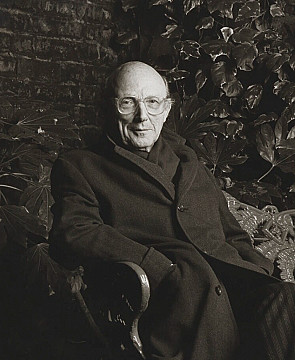
He was born at 2 Kensington Gate, London, and was educated at Eton and Magdalen College, Oxford. He started his career as a stockbroker before enlisting with the Middlesex Yeomanry on the outbreak of WWII. He served in North Africa, but was captured in Libya in 1941 and for two years was held as a prisoner-of-war near Parma in the north of Italy. In 1943, after the Italian Armistice, their camp commandant opened the gates before the Germans could reach them. Gibson, with Edward Tomkins and Hugh Cruddas, successfully evaded recapture, travelling 500-miles by foot, and mainly at night, down to Bari and then across the Apennines, breaking through German lines and reaching Allied-held Sangro in the Abruzzi 81-days later. He was returned to Britain and then seconded to S.O.E.'s Italian section (1944-45) before ending his wartime career in the Foreign Office, Political Intelligence Department (1945-46).
In 1945, he married Dione Pearson, granddaughter of Weetman Pearson, 1st Viscount Cowdray and Chairman of Pearson Plc. that among other ventures had acquired the Westminster Press that owned various regional newspapers. In 1947, Gibson joined Westminster as a journalist, but quickly made his mark within the business itself and became a director in 1948, consolidating and expanding its media interests. In 1957, Pearson's bought the Financial Times and a 50% stake in the The Economist, and Gibson was made a director of both. He became Chairman of Pearson Longman Publishing in 1967, Chairman of the Financial Times in 1975, and Chairman of Pearson Plc. (1978-83). The Telegraph later described his management style as "strategic and unobtrusive," dubbed “Cowdray’s Viceroy” he ran Pearsons “from an eyrie in the Millbank Tower.”
In 1945, he married Dione Pearson, granddaughter of Weetman Pearson, 1st Viscount Cowdray and Chairman of Pearson Plc. that among other ventures had acquired the Westminster Press that owned various regional newspapers. In 1947, Gibson joined Westminster as a journalist, but quickly made his mark within the business itself and became a director in 1948, consolidating and expanding its media interests. In 1957, Pearson's bought the Financial Times and a 50% stake in the The Economist, and Gibson was made a director of both. He became Chairman of Pearson Longman Publishing in 1967, Chairman of the Financial Times in 1975, and Chairman of Pearson Plc. (1978-83). The Telegraph later described his management style as "strategic and unobtrusive," dubbed “Cowdray’s Viceroy” he ran Pearsons “from an eyrie in the Millbank Tower.”
He'd been a member of the Arts Council of Great Britain from 1963, and served as Chairman from 1972 to 1977. He defended against pressure to charge admission fees to public museums and galleries, and against charges of elitism over some of the Council's more controversial funding decisions. In 1975, he was created a life peer as Baron Gibson, of Penn's Rocks in the County of East Sussex, and from 1977 to 1986, he was Chairman of the National Trust, overseeing the acquisitions of Fountains Abbey, Studley Royal Park, Belton House, Calke Abbey, Ightham Mote, and The Argory in Armagh, among others.
As the son of two amateur opera singers, he was brought up in a musical household and, "his great love was for music." A noted patron of the arts, he also served as Chairman of the Advisory Council of the Victoria & Albert Museum; Director of the Royal Opera House; a Trustee of Glyndebourne; a Member of the National Art Collections Fund Committee; Treasurer of the Historic Churches Preservation Trust; and as an advisor to the Gulbenkian Foundation. He lived between Edwardes Square in Kensington, London, and Penns-in-the-Rocks near Groombridge in East Sussex. He also owned an 18th-century villa at Asolo near Venice in Italy. He and his wife were the parents of four sons.
As the son of two amateur opera singers, he was brought up in a musical household and, "his great love was for music." A noted patron of the arts, he also served as Chairman of the Advisory Council of the Victoria & Albert Museum; Director of the Royal Opera House; a Trustee of Glyndebourne; a Member of the National Art Collections Fund Committee; Treasurer of the Historic Churches Preservation Trust; and as an advisor to the Gulbenkian Foundation. He lived between Edwardes Square in Kensington, London, and Penns-in-the-Rocks near Groombridge in East Sussex. He also owned an 18th-century villa at Asolo near Venice in Italy. He and his wife were the parents of four sons.