
John Hampden Randolph (1813-1883)
Sugar Planter, of "Nottoway Plantation" White Castle, Louisiana
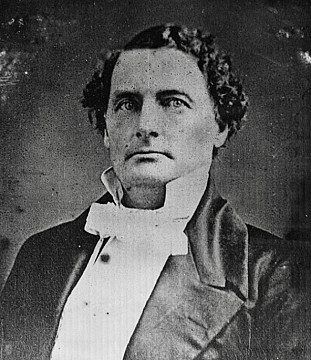
He was born in Lunenburg County, Virginia. He began his career as a cotton planter in Wilkinson County, Mississippi, before purchasing the "Forest Home" plantation and moving to Iberville Parish, Louisiana, in 1841. In 1844, he began producing sugar in partnership with Charles A. Thornton who provided money, slaves, mules, and oxen in exchange for part of the crop. During the 1850s, he began increasing his landholdings around Forest Home, notably acquiring a section on the Mississippi River that he named Nottoway, as well property in Iowa and Wisconsin too. After the death of his wealthy father-in-law in 1856, he began construction on his elaborate mansion "Nottoway" that was completed in 1859. Covering 53,000-square feet, up until it burned down in 2025 it was the largest surviving antebellum plantation house in the Southern States, and after Belle Grove it was the second largest of its kind ever constructed.
In 1858, he went into partnership with his neighbor Franklin Hudson and purchased half of the "Blythewood" Plantation. During the Civil War, the partners took their slaves and valuables and fled to Washington County, Texas, where they farmed for the duration of the war on land rented from the Metcalfe family. During the postwar era, Randolph continued to increase his land holdings. In 1871, he purchased "Bayou Goula" Plantation in a bankruptcy auction, as well as the other half of "Blythewood". From 1872, Randolph then began to liquidate his estate, selling "Blythewood" to his son, Moses, and "Forest Home" to his son, John, and son-in-law Lovick V. Feltus. Two years later "Forest Home" was sold back to him. J.W. Burbridge & Co., a New Orleans commission house that had operated as Randolph's factor since the 1850s, then purchased "Bayou Goula" from him in 1873 and "Forest Home" in 1879. At the time of Randolph's death in 1883, "Nottoway Plantation" and some swamp land were all that remained of his estate, and his widow sold Nottoway in 1889. In 1837, he married Emily, daughter of Judge Moses Liddell, a Planter and Representative in the Mississippi State Legislature, and they had eleven children.
In 1858, he went into partnership with his neighbor Franklin Hudson and purchased half of the "Blythewood" Plantation. During the Civil War, the partners took their slaves and valuables and fled to Washington County, Texas, where they farmed for the duration of the war on land rented from the Metcalfe family. During the postwar era, Randolph continued to increase his land holdings. In 1871, he purchased "Bayou Goula" Plantation in a bankruptcy auction, as well as the other half of "Blythewood". From 1872, Randolph then began to liquidate his estate, selling "Blythewood" to his son, Moses, and "Forest Home" to his son, John, and son-in-law Lovick V. Feltus. Two years later "Forest Home" was sold back to him. J.W. Burbridge & Co., a New Orleans commission house that had operated as Randolph's factor since the 1850s, then purchased "Bayou Goula" from him in 1873 and "Forest Home" in 1879. At the time of Randolph's death in 1883, "Nottoway Plantation" and some swamp land were all that remained of his estate, and his widow sold Nottoway in 1889. In 1837, he married Emily, daughter of Judge Moses Liddell, a Planter and Representative in the Mississippi State Legislature, and they had eleven children.