
James A. Garfield (1831-1881)
Major-General James Abram Garfield, 20th President of the United States (1881)
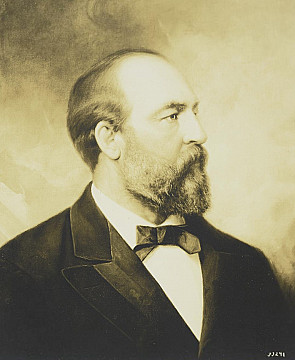
He was preceded in the Presidency by Rutherford B. Hayes, but after serving just six months for the Republican Party, he was assassinated in 1881 and succeeded by his Vice-President, Chester A. Arthur. Born into poverty in Ohio, he worked his way through college and became an educator, serving as President of Hiram College at just 26-years old. He entered politics as a Republican, serving nine terms in the U.S. House of Representatives from 1863 to 1880. He became a powerful orator and influential legislator, advocating for civil rights, sound money policies, and education. During the Civil War, he briefly served as a General in the Union Army, seeing action at the Battles of Shiloh and Chickamauga before returning to Congress.
His political acumen earned him respect within the Republican Party, and he played key roles in Reconstruction legislation. At the 1880 Republican National Convention, Garfield emerged as a compromise candidate for president after the convention deadlocked between other contenders. He won the presidency but served only 200-days. His administration focused on civil service reform and combating political corruption. On July 2, 1881, he was shot by Charles J. Guiteau, a disgruntled office-seeker. Garfield lingered for 79-days before dying on September 19, 1881. His assassination highlighted the importance of civil service reform, leading to the Pendleton Act of 1883, which established merit-based federal employment. In 1858, he married Lucretia Rudolph and they had seven children of whom all but the eldest and youngest lived to adulthood.