
Henry Wadsworth Longfellow (1807-1882)
Poet & Professor at Bowdoin College and Harvard University
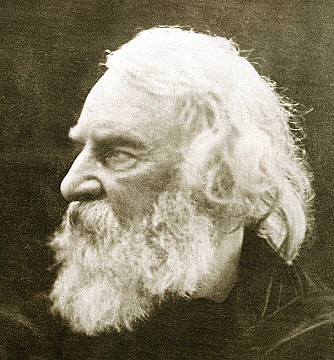
He was born in Portland, Maine, and was educated at Bowdoin College where he demonstrated an early literary talent and became friends with Nathaniel Hawthorne. After graduating, he spent several years studying languages in Europe which had a profound influence on his literary style. He became a professor of modern languages, first at Bowdoin and later at Harvard College, where he taught for eighteen years while simultaneously building his reputation as a poet. He achieved remarkable popular success with works that made poetry accessible to ordinary Americans. His narrative poems, including Evangeline (1847), The Song of Hiawatha (1855), and The Courtship of Miles Standish (1858), became household favorites, capturing American history and mythology in memorable verse. His shorter works, such as Paul Revere's Ride and The Village Blacksmith, entered the nation's cultural consciousness.
His personal life was marked by tragedy. His first wife died young, and his second wife perished in a fire, an event that deeply affected him and inspired some of his most poignant work. Despite these hardships, he continued writing and translating, including a celebrated translation of Dante's Divine Comedy. By his death, Longfellow had become the first American poet honored with a bust in Westminster Abbey's Poets' Corner. Though his reputation declined among critics in the 20th century who found his work overly sentimental, he remained instrumental in establishing a distinctly American literary voice and making poetry part of everyday American life. He was the father of six children.