
Col. George Hampton Young (1799-1880)
of "Waverley" near West Point, Clay Co., Mississippi
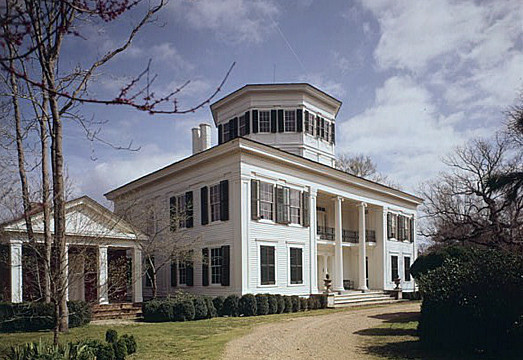
He graduated from the University of Georgia and read law at Columbia College in New York before returning to Lexington, Georgia, representing his native Oglethorpe County in the state legislature. In the early 1830s, he was appointed a U.S. Land Commissioner and came to Mississippi in connection with the sale of the last remaining Chickasaw possessions following the Treaty of Pontotoc (1832). He acquired 50,000-acres of agricultural and timber land on the Tombigbee River on which he operated a passenger ferry and a thriving shipping point for cotton and other plantation products. For 22-years, he served on the Board of Trustees of the University of Mississippi and he helped establish the Mississippi State College for Women at Columbus. Lucius Quintus Cincinnatus Lamar described George Young as a, "typical Southern gentleman of the Old School (but) without any of the blemishes sometimes found in them."
In 1845, he was unsuccessful in his bid for a seat in the U.S. Congress, but in 1847 he secured one of the first mail routes in the area. In 1852, he built "Waverley" that he named for Sir Walter Scott's novel of the same name. Noted for its 4-story octagonal central hall, in 1860 it was valued at $532,000. It was described as, "a temple for southern refinement and hospitality" and during the Civil War it was a meeting place for Confederate officers, including Gen. Nathan Bedford Forrest who spent several weeks recuperating there. The mansion survived the war and remained home to the Young family until they abandoned it after 1913 and it was eventually sold out of the family in 1962. In 1825, Colonel Young married Lucy, daughter of John Watkins, and they were the parents of 10-children.